-
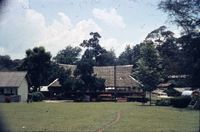 001 The longhouse
 Built to the design of a traditional Orang Asli longhouse, and used mainly for entertainment such as ronggeng - dancing and music, and also displays by visiting dancers and singers.
-
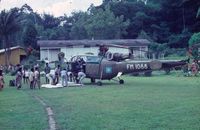 011 Helicopter
 The UK, US and Australian Air Forces provided a helicopter service between Gombak and the kampongs.
-
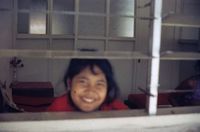 027 Polio patient
 Yok Pan was found abandoned in her kampong as she could not walk due to poliomyelitis. She was brought to Gombak and efforts were made to see if she could walk again. Sadly she couldn't. She was then taught how to use a wheelchair.
-
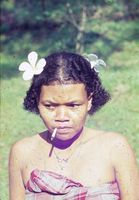 023 Woman of Temiar Tribe
 Orang Asli like to smoke! They are known to start early in life too. When I was at Gombak in the mid-1960s it was widespread yet the medical evidence did not show much sign of carcinoma of the lung. The Orang Asli cultivated their own tobacco then. The few case of carcinoma among the Orang Asli were usually traced back to their contact with commercially produced tobacco products.
-
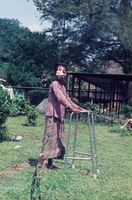 034 Learning to walk again
 Busu, a Semai woman had returned from Kuala Lumpur where she had undergone surgery. She was taught to walk again using a zimmer walking frame donated by a UK womens organization.
-
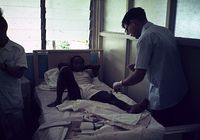 007 General Medical Ward
 Patient being examined by a Canadian CARE volunteer doctor. The hospital depended on trained volunteer medical staff from UK. US, Canada, New Zealand and Australia.
-
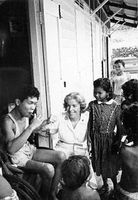 050 Teeth cleaning
 Peace Corps nurse teaching Othman, a paraplegic patient how to clean his teeth. The brushes and toothpaste were supplied by a charity.
-
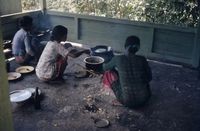 013 Cooking time
 There was a designated area for cooking where the patients' relatives could cook their meals for them. The Orang Asli were encouraged to go hunting and fishing in the jungle to supplement their diet.
-
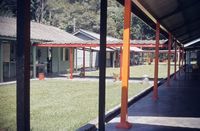 003 Hospital Wards (1)
 Most of the wards were connected by covered walkways. These provided shelter from the monsoons and shade from the sun.
-
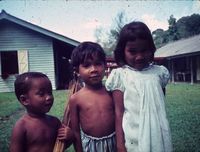 024 Orang Asli children
 Gombak was full of happy healthy children from different tribes. They had accompanied a sick parent to hospital along with the healthy parent. It had been found that many Orang Asli were reluctant to leave their kampongs for hospital treatment, and those who did were unhappy in the strange environment. To encourage them to come to Gombak and also to recover quicker it was found that the presence of the family around them was essential. Most of the children enjoyed the newness of the hospital setting and were happy to be occupied during the day with basic lessons in the three Rs, and art and handicrafts in particular.
-
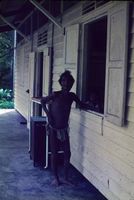 020 Old Man of Semai tribe
 This old man was one of the long-stay tuberculosis patients.
-
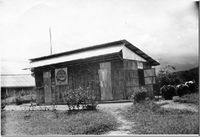 071 Deep Jungle Medical Post
 Satah was one of the many deep jungle medical posts set up to deal with problems "on the spot" and to provide care and treatment for the local area. It was manned by trained Orang Asli Field Staff and was connected to Gombak Hospital by radio link. If a patient needed hospital attention he/she could be airlifted by helicopter to Gombak. This service was provided by UK, US, and Australian Air Forces.
-
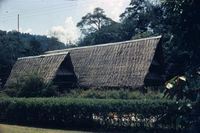 002 Dr. Malcolm Bolton's house
 Home of Dr. J. Malcolm Bolton who was in charge of the medical services to the Orang Asli.
-
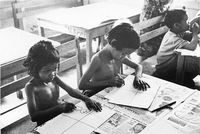 049 Drawing class
 Most Orang Asli children enjoy using bright colours in their pictures and designs. Many of their paintings were bought by visitors to the hospital.
-
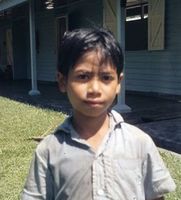 019 Young boy of Semai tribe
 The Semai are part of the large Senoi group of Orang Asli of central Malaysia. The Temiar are also part of this group. I think that the Senoi group formed the largest at the hospital
-
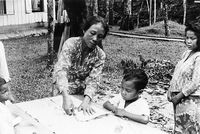 052 Making a baju
 I asked a couple of Malay staff wives to design a paper baju pattern for our sewing class. The Orang Asli women were then able to work through all the processes from chosing their material right through to wearing the baju. When they returned to their kampongs they were able to teach the others there.
-
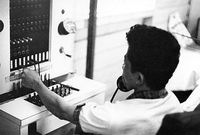 062 Along - paraplegic patient
 Along fell from a tree while searching for food and sustained a serious injury resulting in permanent paralysis of his lower limbs. He became one of the hospital's longterm patients and eventually learned to use a wheelchair. When a telephone exchange was installed in the hospital Along and another paraplegic patient were taught to operate it. This gave then full time employment and a wage, and they became very important and valued members of the hospital community.
-
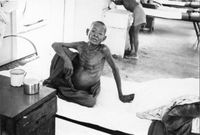 067 Male tuberculosis patient
 Elderly male tuberculosis patient.
-
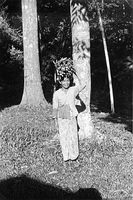 058 Bringing back the firewood
 The jungle provides a good supply of wood for the cooking fires.
-
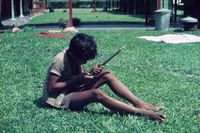 036 Temiar boy carving a pensol
 A popular musical instrument with the Orang Asli is the pensol or nose flute. It is made from locally grown bamboo and then patterns are carved on it. It is often possible to tell what tribe the carver belongs to by looking at the design and patterns on it. Sometimes the carver will incorporate his name into the design as well.
-
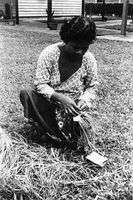 054 Making a small purse
 Pandan grass is used for weaving purses and bags, where softness and flexibility is needed. Pandan can be dyed and so the Orang Asli can design and weave intricate patterns into their purses, etc.
-
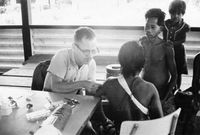 082 B.C.G. immunization programme
 Semai woman receiving her B.C.G.inoculation from the visiting Peace Corps Nurse.
-
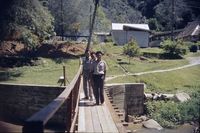 008 Orang Asli Field Staff
 If a young Orang Asli man or woman has a basic education in reading and writing he/she could be given medical training at Gombak. If successful, he/she would then work in a deep jungle medical post as well as at the hospital. Some Field Staff were able to progress to positions of responsibility.
-
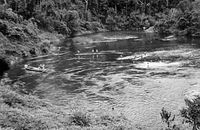 072 Sungai Satah, Pahang
 Orang Asli spearing fish from boats and rafts on the Sungai Satah.
-
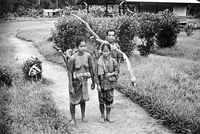 077 Gathering the wood
 Wood gathering trio.

